I've spent nearly 20 years figuring out what makes marketing work — and what gets in the way
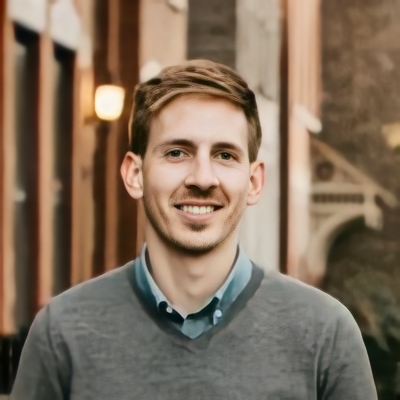
I started my career at advertising agencies, where I spent 11 years working across clients, industries, teams, and just about every corner of marketing.
Then I left the agency world and spent the next several years consulting with organizations on marketing, strategy, and growth.
Today, I bring those experiences together as a Fractional CMO — getting close enough to the business to understand what's really happening, setting the marketing direction, and helping make sure the right work actually gets done.
Looking back, the path here makes a lot of sense.
My first marketing education came from managing millions of pieces of direct mail
My first job out of college was at Aspen Marketing Services, where I spent five years working on large-scale direct marketing programs for companies like AT&T.
Direct mail wasn't exactly the glamorous side of advertising. But it was an incredible place to learn marketing.
We used data to understand audiences. We tested messaging and creative. We measured response. We learned from what happened and applied it to the next campaign. And when you're sending millions of pieces of communication, you learn pretty quickly that details matter.
As an account person, I got to see the whole process — working with clients to define what we were trying to accomplish, partnering with creative and production teams, managing complicated programs through execution, and coming back to the results to figure out what we'd learned.
That cycle — understand, create, execute, measure, learn, improve — became a foundation for how I still think about marketing today.
Then the marketing got a lot more complex
From there, I moved to Fathom Communications, working with companies like International Truck and Navistar.
Now marketing had to work across a national brand, hundreds of independently operated dealerships, B2B buyers, local customers, sales organizations, and even different international markets.
Then I joined Ogilvy & Mather, where I spent four years working with large B2B organizations across brand, digital, direct marketing, media, sales enablement, positioning, messaging, and creative. My agency career ultimately spanned large-scale direct response, complex B2B2C marketing, and broader account leadership.
Throughout all of it, I was an account person. My job was to understand enough about everyone else's specialty to help bring it all together.
And I was always a little envious of everyone else's job.
Sometimes I wanted to be the strategist. Sometimes I wanted to be on the creative team. Sometimes I wanted to be the client. I liked digging into the numbers, managing people, pitching new business, and figuring out how all the pieces fit together.
It took me a while to realize that wasn't indecision.
It was probably a pretty good indication of the kind of marketer I was becoming.
Then I left the agency world
After 11 years, I started working independently.
Suddenly there wasn't a strategy department down the hall or a creative team to call. Clients were hiring me.
Since then, I've worked with dozens of organizations — from national brands and startups to growing service businesses and multi-location healthcare practices — sometimes solving one specific problem and sometimes becoming deeply involved in the business.
I've also advised startups and, in some cases, gotten directly involved with early-stage companies and founding teams.
That gave me a different perspective. It's one thing to recommend where someone else should invest limited time and money. It's another to help make those decisions when the time and money are yours.
And as I got closer to the businesses themselves, the questions got bigger.
Not just:
What should this campaign say?
But:
What should marketing actually be doing? Who should be doing it? Where should we invest? What's working? Why aren't leads converting? What does the business need from marketing right now?
Eventually, I realized I'd found the job I was built for
That's what led me to Fractional CMO work.
I didn't get here by taking one marketing specialty I'd spent my career doing and offering it fractionally.
In some ways, the opposite happened.
I spent years moving across clients, industries, disciplines, teams, and business models. Then I spent years consulting independently and getting closer to the businesses themselves.
Fractional CMO work gave me a way to bring all of it together — strategy and execution, creativity and data, people and process, marketing and the larger business.
The biggest marketing problems rarely stay neatly inside the marketing department.
Every business needs its own way of working
Nearly 20 years of doing this means I don't start from a blank page every time.
I have frameworks I use, questions I know to ask, processes that work, patterns I've learned to recognize, and plenty of opinions about what good marketing looks like.
But I don't believe every organization should be put through the same playbook.
Your customers, team, resources, goals, and challenges are different. The right marketing system for a founder with one marketing employee isn't the same as the right system for an established organization managing an internal team and several outside partners.
So I bring everything I've learned with me, but we build the approach around your organization.
The goal isn't for you to adopt my system. It's for me to help build the right system for you.
A few things I've learned along the way
More marketing isn't always the answer.
Sometimes the problem is marketing. Sometimes it's conversion, customer experience, capacity, measurement, or something else marketing depends on. You have to understand the business around it.
Strategy has to work in the real world.
A plan isn't particularly useful if you don't have the people, resources, time, or capabilities to execute it. Figuring out who should do the work is often just as important as figuring out what the work should be.
Good marketing should get clearer over time.
We won't know everything at the beginning. But as we execute, measure, and learn, we should get increasingly confident about what's working, what isn't, and where to focus next.
I found FamTech. Behavioral Health Practices found me.
I didn't sit down one day, analyze a list of industries, and decide these were the two I wanted to specialize in.
I arrived at each very differently.
FamTech started with the people
When I started Founders in Full, I talked with founders building all kinds of companies. After about a dozen episodes, a few referrals happened to lead me to founders building products and services for parents, families, and caregivers.
Those conversations just clicked.
As I thought about it more, I realized some of my favorite clients over the years had been in this world too. I liked the founders. I believed in what they were building. The relationships tended to be built on trust, and I genuinely felt good about helping their businesses succeed.
That led me deeper into the ecosystem and eventually to becoming a Champion Partner with FamTech.org.
At some point, I decided not to overthink it. This was work I enjoyed, with people I liked, in service of missions I cared about.
So I went all in.
Explore my work with FamTech companies →Behavioral Health Practices found me a little differently
My focus on Behavioral Health Practices grew out of a long-term client relationship.
As I became more deeply involved with the practice, my role kept expanding. Marketing became connected to intake, clinician capacity, services, locations, conversion, measurement, and the broader goals of the business. Over time, the relationship evolved into Fractional CMO leadership.
I understood their business, they trusted me with increasingly important problems, and I discovered that the complexity of a growing practice fit extremely well with the way I like to work.
Then they started referring me to other practice owners.
In this case, I didn't really choose the niche. The work led me there.
Explore my work with Behavioral Health Practices →I do my best work when I'm part of the team
I don't want to be the consultant who disappears, comes back with a presentation, and leaves everyone else to figure out what happens next.
I like getting close enough to the business to understand what's actually happening. I want to know the people doing the work. I want clients to tell me when something doesn't make sense. And I want us to be able to change our minds when the evidence tells us something different.
That doesn't mean I need to be involved in everything. It means I want enough context and trust to make good decisions alongside you.
Whether we're working together on a focused project or I'm serving as your Fractional CMO, I want it to feel less like you've hired an outside expert and more like you've added an experienced marketing leader to the team.
A little more about me
I live in the Chicago area with my wife and our two kids.
When I'm not spending time with my family, I love watching movies, running marathons, following Chicago sports, and golfing.
Have a marketing challenge you want to talk through?
You don't need to know exactly what kind of help you need. Tell me what's happening, what you're trying to accomplish, and where you're getting stuck.
Let's Talk →